
AR GLASSES THAT READ THE ROOM
BTW
BRIEF
Reminders interrupt. You pull out your phone to dismiss them and lose an hour. BTW surfaces information when you can act on it — but building it taught us that 'should this exist' matters more than 'could this exist.
TEAM
Ethan Blatt
Cooper Baum
Josephine Welin
FOCUS
Concept
Development
Interaction- Design
DURATION
2 Weeks
YEAR
2025
Most reminders happens at the wrong time
You're in a meeting when your phone buzzes: "Take medication." You're on a run when it reminds you about that work email. You're mid-conversation when it tells you to buy milk. So you pull out your phone to dismiss it—and 20 minutes later you're doom scrolling through Instagram instead of living your actual life.
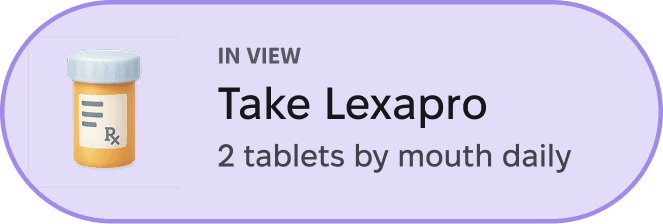
BTW flips this. It's an AR system that surfaces reminders based on what you're looking at, where you are, and what you're doing right now. Look at your prescription bottle? Get reminded to take your meds. Sit down at your desk? See what's due this week. The information appears when you can actually act on it, not just because a timer went off.

The brief gave us everything and nothing
Design anything off-screen. No apps. No constraints. Which meant we spent the first week drowning in possibilities—wearables, installations, ambient devices. We kept circling back to the same tension: we're all glued to our phones, but we also genuinely need what's on them. Calendars. Reminders. Information. How do you stay present without losing the scaffolding that keeps your life together?
Context over timers
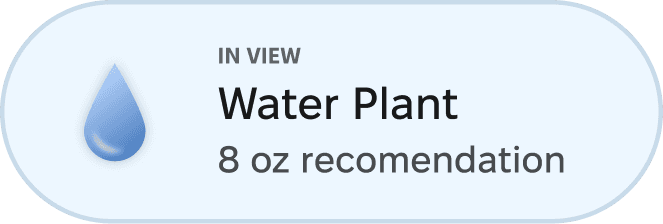
That became our north star. Most reminder systems treat your life like a linear timeline—9am, 2pm, 5pm. But that's not how memory works. You remember to water plants when you see them dying. You remember to text someone when you pass their neighborhood. BTW works with how humans actually remember things: through environmental cues and context.
We focused on three scenarios where missing a reminder has real consequences: taking medication, social connections, and recurring care tasks like watering plants. In two weeks, we couldn't build everything, but we could prove why context matters more than timers.
We also added music recognition
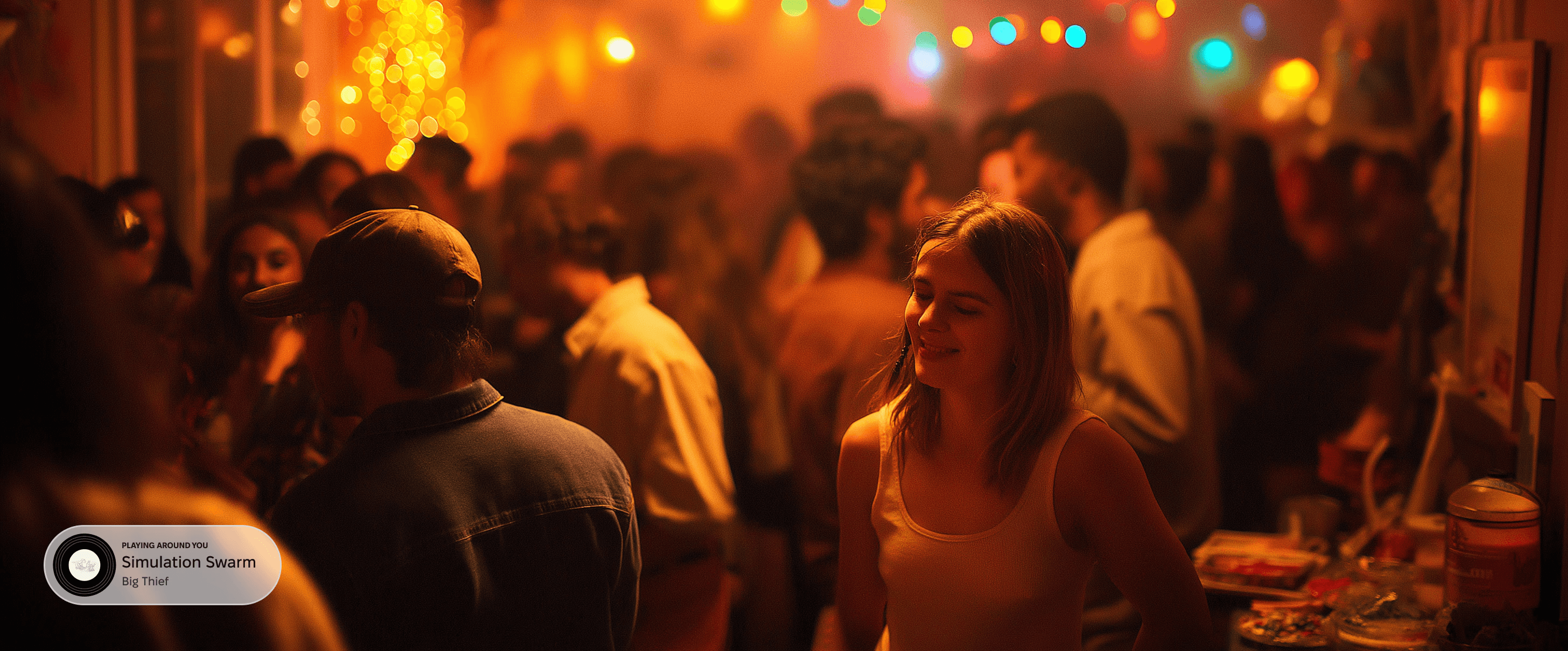
Not because it's essential. Because functionality doesn't have to be joyless. You're walking through a coffee shop, you hear a song you love, and your instinct is to pull out Shazam. Instead, BTW identifies it without breaking your conversation. Small joy. Proof that staying present doesn't mean sacrificing everything screens give us.
My role was mostly storytelling
I helped narrow down which reminders to showcase—medication, social, care tasks—and I wrote the video narrative. With two weeks and zero budget, we had to make every frame count. I mapped where AR overlays would appear and why, ensuring each one felt purposeful rather than gimmicky. The goal wasn't to show off AR capabilities. It was to make someone watching go, "Oh, I actually need this."
Here's what we didn't solve: privacy
An AR system that constantly reads your environment is a surveillance nightmare if designed wrong. We acknowledged this in our presentation but didn't have time to prototype consent models or data controls. Would recognition happen locally or in the cloud? What could users turn off? What would be off-limits entirely? These questions matter more than the polish of our demo video, and in a longer timeline, I'd have spent half the project here.
What stuck with me:
I'm better at questioning briefs than I thought. The whole project clicked when we stopped trying to design "something off-screen" and started asking "why are we glued to screens in the first place?" That reframing—from product to behavior—unlocked everything.
But unlimited freedom is still paralyzing. We burned days debating possibilities when we should've been testing assumptions. Next time, I'd constrain myself faster—pick three contexts, prototype one deeply, learn whether people actually stay more present or just get distracted differently.
And I'd flip the timeline. Ethics first, demo second. The surveillance implications aren't a footnote you tack on at the end. They're the design problem. We treated privacy as something to acknowledge in the last slide. That's backwards. "Should this exist?" is harder and more important than "could this exist?"
This was my first speculative project. Turns out making a compelling video about something that doesn't exist yet forces clarity in a way static mockups never do. You can't hide behind polish. You have to commit to a point of view.